
The Future of HR Doesn't Need a Seat at the Table
May 10, 2026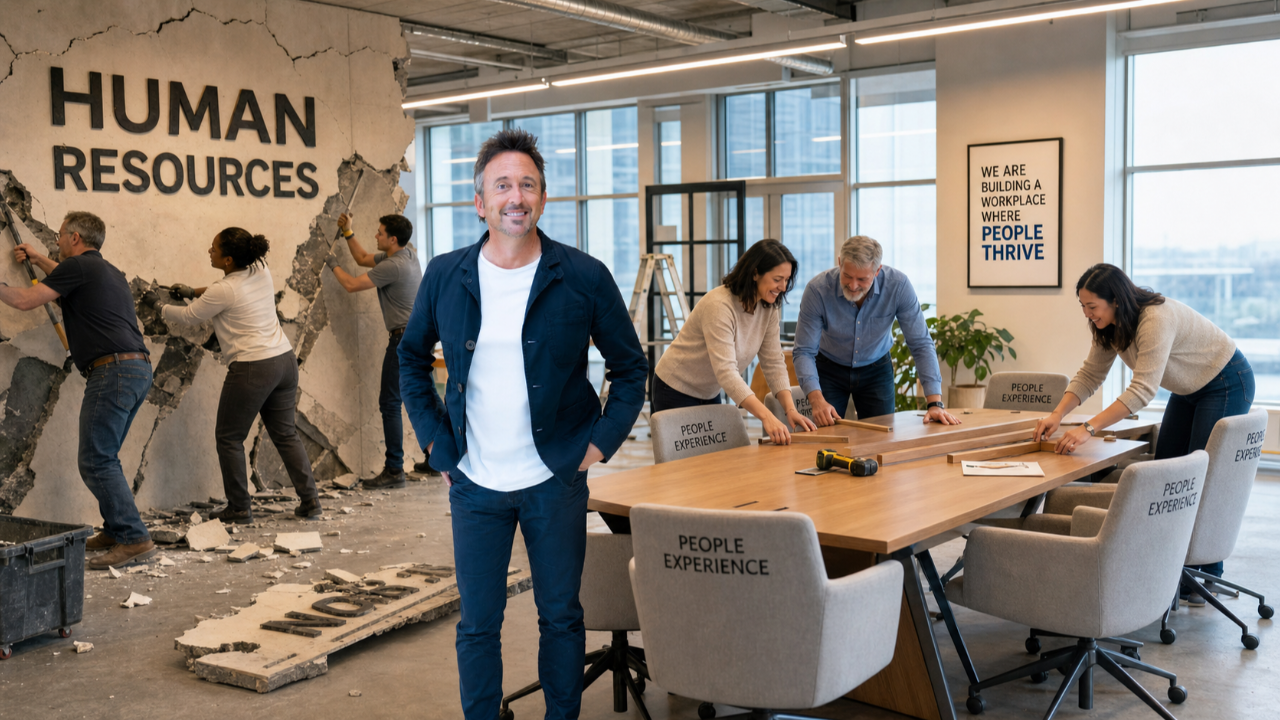
HR has been fighting for a seat at the table for thirty years.
That fight was always the wrong one.
The people in this profession got into it for the right reason. Not the compliance. Not the policy. Not the performance management cycle. The human being. They saw what a good leader could do to a person's life (and what a bad one could destroy), and they decided they wanted to be on the right side of that.
That belief is right.
The fight has been wrong.
Two Thirds
McKinsey published research in 2025 showing two-thirds of current HR tasks can be automated to a large degree. IBM's CEO confirmed the same year that their AI agent now handles 94 percent of routine HR queries. Josh Bersin estimates HR headcount could fall 20 to 30 percent per employee as a result.
This is not a prediction. It is already happening.
One CEO replaced 700 customer service agents with AI. Cut his workforce by nearly 2,000 people. Then walked it back. Quietly. In 2025.
Not because the AI wasn't efficient.
Because customers wanted a human.
Efficiency without empathy isn't enough. The humans came back. Remember that.
For decades, organisations have needed human doings. People who process the work. Manage it. Report on it. Administer it. AI is taking all of that.
“You’re paid to work around here, not think!”
And when the doing disappears, what walks back in the door every morning isn't a human doing.
It's a human being.
Capable of things no algorithm will ever replicate. Creativity. Curiosity. Imagination. Intuition. Critical Thinking. Empathy. The ability to hold a hard conversation. To read a room. To build trust at scale.
“You’re paid to think around here, and if you have to do some work, let me know.”
The World Economic Forum said it directly: empathy and active listening have literally no AI substitution potential.
These are not soft skills. They are the only skills that cannot be automated. They are entirely dependent on the quality of leadership in your organisation.
“Businesses don’t run out of money. They run out of ideas and innovation. Ideas and innovation come from people, not budgets (nor AI). It's a finding game, not a funding game.”
- a Clarism
AHRI's own research shows nine in ten Australian organisations expect roles to be at risk or significantly changed within three to five years. Only seven percent prioritise critical thinking development in their training investment.
That gap is not an AI problem.
That is a leadership development problem. And it is entirely yours to solve.
You Have the Wrong Responsibility
HR has historically been responsible for the experience people bring to the organisation. The skills they arrive with. The compliance they sign off on. The time they punch in and out.
That is the wrong responsibility.
“You aren't responsible for the experience and time people bring to your organisation. You are responsible for how people experience the organisation they give their time to.”
- a Clarism
Whether they feel seen or invisible. Developed or stagnant. Trusted or just managed.
People don't leave organisations. They leave the feeling of not mattering.
They stay because the work means something. Because it stretches them. Because they belong somewhere. Every person in your organisation is asking those questions right now. Today.
Most organisations answer them by accident. The great ones answer them by design.
That is People Experience. Not a programme. Not a survey. A deliberate architecture of belonging.
And it is not an HR initiative. It is a strategic variable.
140 Years
You've invested in leadership development. Probably more than once. Three to five days. Intensive content. Certificate at the end. Leaders who came back energised — and reverted within weeks.
And then you defended the invoice.
Hermann Ebbinghaus mapped the forgetting curve in 1885. Within 24 hours of learning something new, people retain around 33 percent. After one month, 21 percent remains.
The leadership development industry has spent 140 years building programmes that structurally ignore it. And we have been buying them.
Your leaders don't need to know more about leadership. They could recite the principles in their sleep. They know what psychological safety is. They know they should be coaching instead of controlling.
They know.
The gap has never been knowledge. The gap is the distance between understanding something and actually doing it differently. Under real pressure. When reverting is easier. When nobody is watching.
That gap doesn't close in a conference room.
Less is more, more often. The most effective leadership development goes deepest on what matters most. Repeats it until it sticks. And measures what actually changed at 90 days in the real world.
Not energy on Monday morning. Behaviour three months later.
The Part Nobody Says Out Loud
We have spent decades treating humans as a resource. Something to be managed. Allocated. Optimised.
The language gave it away before anything else did.
Human. Resources. Two words that should never have been put together.
The future isn't Human Resources. It's Resources for Humans. An organisation that exists to serve the people inside it. Not extract from them. Serve them.
When your competitors can copy your product, your pricing, your technology, your go-to-market strategy, People Experience is the one thing they cannot replicate. Because it lives inside the culture. And culture lives inside the leaders. And the leaders are developed by the people in your function.
Here is the most confronting thing in all of this.
The most successful outcome for every person in HR is the day your organisation no longer needs an HR department.
Not because people stopped mattering.
Because people started mattering to everyone.
Not because the function disappeared. Because it dissolved into every leader in the building. Every conversation. Every decision. Every seat at every table.
Work yourself into every seat. Until the seat doesn't need a label anymore.
That is not the end of this profession. That is its greatest achievement.
Stop Fighting for the Seat
Twelve months from now, every person in your organisation will have experienced another year of leadership.
They will have felt seen or invisible. Developed or left to figure it out alone. Trusted or micromanaged. They will have done work that meant something or work that felt like it didn't.
And some of them…you won't know which ones…will have made a quiet decision about whether to stay. Based on nothing more than how that experience felt.
You've been carrying the right belief your entire career. The belief that people are not a resource to be managed. That leadership can be the mechanism that makes great organisations possible. That work, at its best, can be a meaningful human experience.
You were right. You were right the whole time.
You were just fighting for the wrong thing.
Stop fighting for a seat.
Start building the table.
Not for HR. For humans.
The profession just got its mandate.
And it was always yours.
Dave Clare, Founder - Circle Leadership Global
Dave Clare works with organisations ready to stop aligning culture, leadership and strategy — and start architecting them as one. Author. Speaker. Founder of Circle Leadership Global.

